
Technical Expertise in Nature’s Most Demanding Environments

The Sedona Fire District’s Special Operations encompasses a range of specialized rescue services tailored to the unique challenges presented by Sedona’s diverse and rugged terrain. Within this program, the Technical Rescue Team (TRT)—comprised of 18 highly trained members—focuses on complex rescue scenarios requiring advanced skills and equipment.

Sedona is often described as a city within a National Park, attracting over 2.2 million trail and forest users annually (2023 NAU Study). With more than 400 miles of official and social trails weaving through narrow canyons, steep desert towers, and remote wilderness, the area offers a plethora of outdoor activities.

Both visitors and locals engage in various recreational pursuits, including hiking, biking, rock climbing, scrambling, canyoneering, off-roading, swimming in Oak Creek, and base jumping. While these activities showcase Sedona’s natural beauty, they also introduce risks. Some emergencies arise from unforeseen circumstances, such as sudden medical events or shifting conditions, even among well-prepared individuals. Others result from avoidable mistakes like inadequate planning or misjudging the terrain.

Annually, SFD responds to over 200 backcountry rescues, ranging from physically demanding patient carry-outs to highly technical operations necessitating rope systems, swiftwater tactics, or helicopter-based extractions. Each call demands precision, coordination, and a deep understanding of Sedona’s environment.

We take pride in our role as stewards of this remarkable outdoor community. Through our Special Operations program and the dedicated efforts of the Technical Rescue Team, we strive to ensure that residents and visitors alike can safely experience the freedom, adventure, and natural beauty of Sedona’s public lands.

  • A firefighter hangs by a rope from a helicopter with a patient.
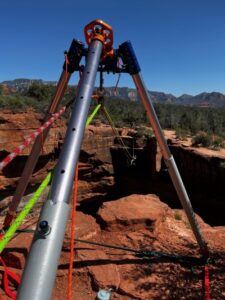
  • Firefighters performing technical training using ropes and pulleys.
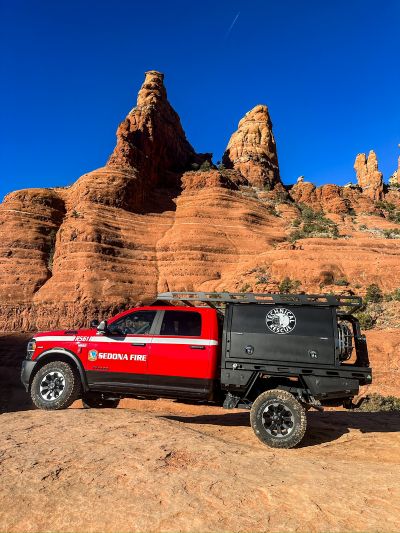
  • The technical rescue vehicle parked in front of a canyon vista for training.
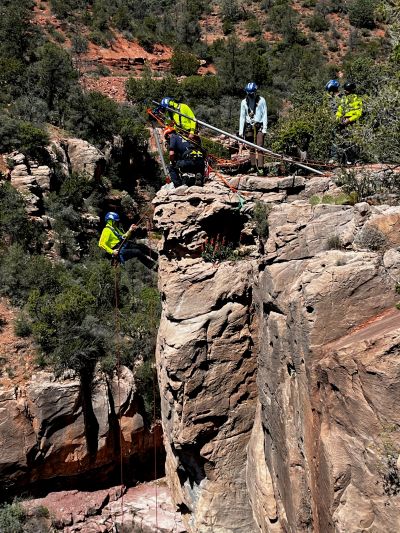
  • Rope work over a canyon

Backcountry Rescue

Where Skill Meets Terrain.

From hikers caught out after dark to injured visitors deep in the wilderness, Sedona Fire District provides emergency care and rescue across vast, varied, and often unforgiving landscapes.

These rescues involve long approach hikes, extreme temperatures, and difficult terrain — all while delivering the same level of medical care found in urban settings. Crews use specialized equipment like stokes baskets and big-wheel carriers to extract patients from tight, technical trails.

SFD works in close partnership with the Arizona Department of Public Safety, Coconino County Search and Rescue, and Yavapai County Search and Rescue to ensure timely and effective response across all backcountry incidents.

Swiftwater Rescue

Fast Water. Fast Response.

Sedona’s Oak Creek and surrounding drainages can change dramatically during monsoon storms or spring runoff, turning peaceful water features into fast-moving hazards in minutes. Flash floods can sweep across roads, trails, and canyons without warning.

Given the frequency of these events, all SFD line staff are trained to the Operations Level in Swiftwater Rescue, ensuring every crew member can contribute effectively and safely during water-based incidents.

SFD’s Swiftwater Rescue Team builds on this foundation with advanced certification and instructional expertise. All team members meet Rescue 3 International standards and many serve as instructors, working closely with Verde Valley agencies to deliver joint training and coordinated response.

Whether responding to a stranded hiker, flooded vehicle, or rapidly rising creek, SFD’s teams are prepared to act.

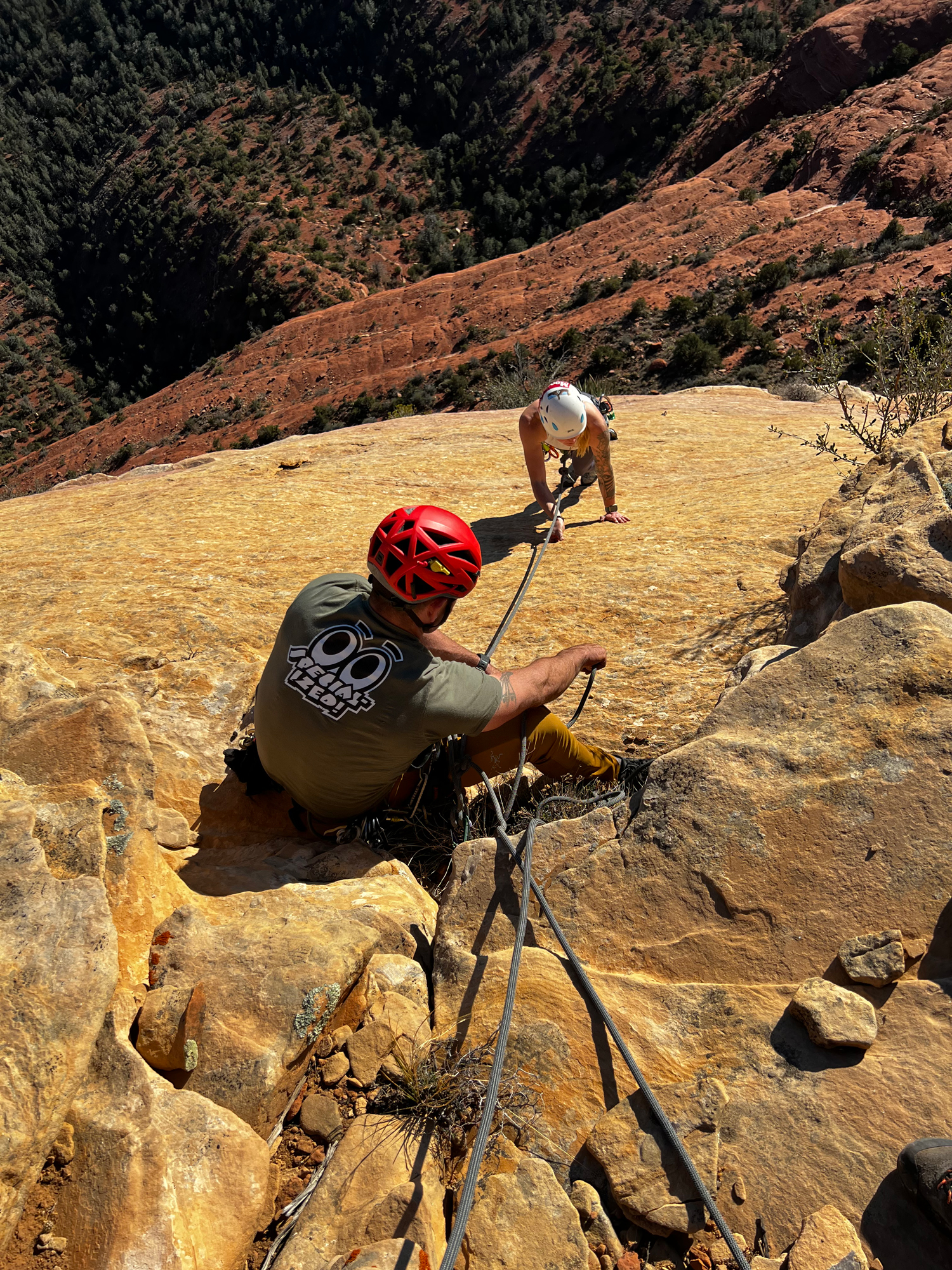
Two firefighters train in technical ropes rescue.

Technical Rope Rescue

Precision Rescues in Vertical Environments.

Steep cliffs, red rock spires, and narrow slot canyons are part of Sedona’s dramatic scenery — and also some of the most common sites for rope-related rescues. Sedona Fire District’s Technical Rescue Team (TRT) is specially trained to operate in these environments with precision, safety, and speed.

The entirety of SFD’s line staff is trained to the Operations Level in Rope Rescue, providing a consistent and capable response across all shifts. Our 18-member Technical Rescue Team builds on that foundation — all trained to a minimum of Technician Level, with many members obtaining advanced certifications to further expand the team’s capabilities.

Some of the rope rescues we perform involve rock climbers stuck or injured on multi-pitch routes, and canyoneers stranded in slot canyons due to injury, rising water, or stuck ropes. We also frequently assist hikers and scramblers who have pushed beyond their ability or lost the route on exposed terrain. Some are injured in falls or become cliffed out in remote, technical areas with no safe way down. These incidents often require complex access, specialized rigging systems, and long, technical evacuations — sometimes combined with swiftwater or helicopter components.

TRT members are routinely called upon to coordinate rescues across rugged, vertical environments where conventional access is impossible. Their deep understanding of Sedona’s terrain and rescue techniques allows SFD to deliver high-quality care and safe extractions under extreme conditions.

A firefighter with a patient on a gurney are transported by a helicopter out of a canyon.

Helicopter Rescue

When the risk and complexities reach critical levels.

Some parts of Sedona’s rugged landscape are unreachable by ground or so complex, risky and are extremely labor intensive for extrication — and in those moments, Sedona Fire District’s Helicopter Rescue Team (HRT) steps in. In cooperation with the Arizona Department of Public Safety Aviation Bureau, our specialized crews perform aerial rescue operations in the most remote and difficult-to-access locations.

The team includes six highly trained SFD members — three Short Haul Technicians and three certified in both Hoist and Short Haul operations. Using state-of-the-art helicopters, these rescuers insert via hoist or rappel, stabilize and package patients, and extract directly to safety or definitive care.

Aircraft used include:

  • Bell 429 Hoist Helicopter – 287-foot hoist cable with the capability to bring patients immediately inboard for rapid medical care en-route to definitive care.
  • Bell 407 – Used for short haul and rappel access/egress in tight or otherwise inaccessible areas.

These aerial rescues are complex, high-risk operations carried out only by highly trained professionals — bypassing lengthy ground extrications and improving patient outcomes when every second counts.

Technical Rescue Training

Teaching What We Practice.

As a regional leader in technical rescue education, Sedona Fire District provides professional-level instruction in both rope and swiftwater rescue for mutual aid partners and visiting responders.

All instruction is conducted to Rescue 3 International standards and incorporates best practices from the National Park Service, ensuring consistency, interoperability, and excellence across agency lines. Courses are designed to reflect real-world environments and challenges commonly faced in Sedona and throughout the Verde Valley.

SFD’s instructors bring operational expertise from the field to the classroom — ensuring every participant walks away with skills that matter in critical moments.
Refer to SFD’s Calendar of Events
Register for a class!

Be Smart. Be Prepared.

Enjoy Sedona Responsibly.

Whether you’re hiking a popular trail or exploring deep into Sedona’s remote backcountry, thoughtful preparation and responsible behavior are essential to both your safety and the preservation of this unique landscape. Sedona Fire District encourages all visitors and locals to follow these current best practices:

  • Bring more water than you think you’ll need. Dehydration is one of the most common reasons for rescue. A minimum of 1 liter per hour per person is recommended in hot conditions.

  • Use a reliable navigation method. Know your route before you go and bring a charged GPS device, phone with offline maps, or paper map and compass. Don’t rely solely on cell signal.

  • Know your limits. Choose trails and activities that match your experience, fitness, and preparedness. When in doubt, turn back early.

  • Start early and be aware of time. Avoid the heat of the day and always plan to return well before sunset. Many rescues happen because hikers get caught out after dark.

  • Check the weather. Flash floods, high winds, triple-digit heat, and significant winter conditions can create rapidly changing and dangerous conditions. Always check for red flag, flood, heat, or winter warnings.

  • Leave No Trace. Stay on designated trails to protect fragile desert vegetation, pack out all trash (even fruit peels), and avoid disturbing wildlife or cultural sites.

  • Wear appropriate footwear. Many Sedona trails include slickrock, ledges, and steep rock scrambles. Approach shoes — designed for technical terrain — offer superior traction and stability. Look for shoes with sticky rubber soles, which improve grip on sandstone and reduce your risk of slipping.

  • Let someone know your plan. Share your intended route and return time with a friend or family member — and stick to it.

  • Avoid flooded areas. Never attempt to cross a flooded road, wash, or creek. Just a few inches of water can be dangerous.

By preparing wisely and recreating respectfully, you’ll help reduce the risk of injury, avoid the need for SFD’s services, and keep Sedona’s trails beautiful and accessible for everyone.